ONLINE NOW - OPEN 24/7
If you manage, own, or occupy a commercial property, backflow testing is not something to leave until there is a problem. Backflow happens when water flows the wrong way and contaminated water is pulled back into the clean drinking supply.
In a commercial building, that risk can involve more people, more plumbing complexity, and more serious consequences.
The point is simple: if your building has complex or shared plumbing, regular backflow prevention testing helps protect health, keeps the property compliant, and reduces avoidable disruption.
In this guide, we explain what backflow means, why commercial sites in South Melbourne face higher risk, how annual backflow testing works, and when to arrange a professional inspection.
In a commercial plumbing system, backflow means water moves in reverse and carries contaminants back into the drinking water supply. This usually happens when pressure changes inside the system. If supply pressure drops, water from within the property can be drawn back toward the main water supply.
This can happen in buildings with cross connections, which are points where drinking water is connected directly or indirectly to another source or system.
In commercial properties, that may involve:
One of the biggest challenges with backflow is that the problem is often not obvious. You usually cannot see, smell, or taste contamination early, which is why proper backflow inspection and testing are so important.
Commercial buildings are usually more complex than standard residential properties. They often have:
This includes office buildings, restaurants, cafes, high-rise apartments, mixed-use developments, childcare centres, aged care facilities, warehouses, and industrial properties.
In multi-storey buildings, pressure fluctuations can become more common because the plumbing system serves many levels and varying usage patterns throughout the day.
South Melbourne also falls within South East Water’s regulated service area, where containment backflow prevention devices and annual testing requirements are taken seriously.
The more complex the building, the higher the backflow risk usually becomes.
Ignoring backflow testing can quickly become more than a plumbing issue. It can affect health, compliance, and day-to-day building operations.
If contaminated water enters the drinking supply, staff, tenants, customers, and visitors may be exposed to bacteria, chemicals, or waste from within the property. That is why backflow prevention is treated as a public health issue, not simply a maintenance issue.
Many commercial properties with medium or high hazard devices must have them registered and tested regularly. If this does not happen, the property may face notices, enforcement action, or compliance issues with the water authority.
Backflow problems can lead to tenant complaints, operational disruption, and avoidable pressure on property managers and business owners.
For hospitality venues, medical facilities, childcare centres, and aged care properties, even a suspected water quality issue can create serious business and reputational consequences.
When backflow testing is missed, the risk moves well beyond plumbing and becomes a broader building management liability.
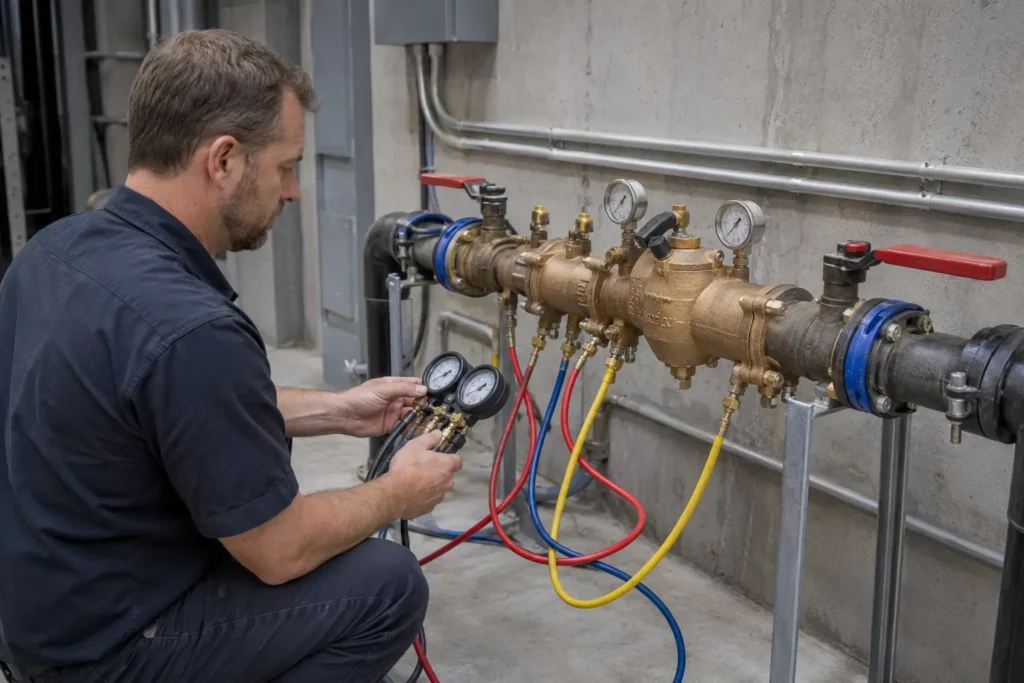
A backflow prevention device is designed to stop contaminated water from flowing back into the clean water supply. Testing confirms that the device is operating correctly and that the property remains protected.
During a backflow inspection, a licensed plumber will usually:
For many commercial properties, this forms part of annual backflow testing requirements.
In Victoria, commissioning, maintenance, initial testing, and annual retesting of a testable backflow prevention device can only be carried out by a person licensed in the specialised class of Backflow Prevention Work. That matters because test results must be technically correct, properly documented, and defensible if the property is audited.
Many owners and managers assume backflow prevention only applies to highly industrial sites.
In reality, many ordinary commercial properties contain the types of plumbing systems and cross connections that create a testing obligation.
This commonly applies to:
If a building serves multiple occupants or contains specialist water-connected systems, it is safer to have the property assessed properly rather than assume the risk is low.
Routine annual testing remains the main safeguard, but some warning signs can indicate the device or wider plumbing system needs earlier attention.
These signs can include:
The difficulty is that many backflow problems develop quietly without obvious warning signs until the issue already affects the building.
If any of these signs appear, arranging a professional backflow inspection sooner is usually the safest option.
We provide compliant, professional backflow testing in South Melbourne for commercial buildings, strata properties, and facilities that need dependable maintenance support.
When you call, you speak directly with an experienced plumber, not a receptionist. Blue Diamond Plumbing has operated across Melbourne since 1984 and is known for responsive service, honest advice, and thorough reporting. Where needed, the team also provides before and after photos to help support maintenance and compliance records.
If your property needs annual backflow testing or inspection, call 03 9636 0156 to help protect your water supply, compliance position, and day-to-day building operations.