ONLINE NOW - OPEN 24/7
Continuous flow systems heat water as it is needed, while storage systems keep heated water in a tank ready for use. For Southbank homes, the right choice depends on household hot water demand, available installation space, existing plumbing and energy supply, and how the system will be used.
Key Takeaways:
Table of Contents:
Replacing a hot water system can mean deciding whether to stay with the same type of system or switch to something different. Continuous flow and storage systems both provide reliable hot water, but they do it in different ways.
For Southbank homeowners, the right choice depends on the property and how hot water is used day to day.
Continuous flow and storage systems differ mainly in how they heat and supply hot water. A continuous flow system heats water as it is needed, while a storage system heats water and keeps it in a tank ready for use.
A continuous flow system heats water when a hot tap is turned on rather than storing a supply of heated water in a tank. The system still needs to be correctly sized for the amount of hot water the household may use at one time.
A storage system heats water and holds it in an insulated tank until it is needed. The amount of usable hot water available depends on the tank's capacity and the system's recovery rate, including when and how quickly it reheats water.
The way a household uses hot water can affect which system is more suitable. The amount of hot water used and how often several fixtures need hot water at the same time are both relevant.
A storage system can supply hot water from the tank, but its usable supply may be depleted if demand exceeds the system's recovery rate. If that happens, the household may need to wait while the system reheats, so the tank capacity and recovery rate need to suit typical hot water use.
A continuous flow system doesn't rely on a stored supply, but it still has limits on how much hot water it can deliver at once. The system needs to be sized to handle the household's expected demand, particularly when hot water may be used at several fixtures at the same time.
The space available for a hot water system can affect which options are practical, especially when replacing an existing system. Changing from storage to continuous flow, or the other way around, may also involve different installation requirements.
Without a storage tank, continuous flow systems can take up less space. However, they still need a suitable installation location and the required gas or electrical supply, depending on the system.
Storage systems need enough room for the tank and a suitable installation location. When replacing an existing system, the available space and current plumbing and energy connections can affect the size and type of system that can be installed.
The way each system heats water affects when energy is used. Continuous flow systems heat water when it is needed, while storage systems heat water and hold it in an insulated tank ready for use.
Because water is heated on demand, continuous flow systems avoid the heat loss associated with keeping a tank of water hot. Actual energy use still depends on the system, energy source and how much hot water the household uses.
Storage tanks are insulated, but some heat can still be lost while hot water is being stored. How much energy a storage system uses also depends on factors such as the system, tank size, energy source and household hot water use.
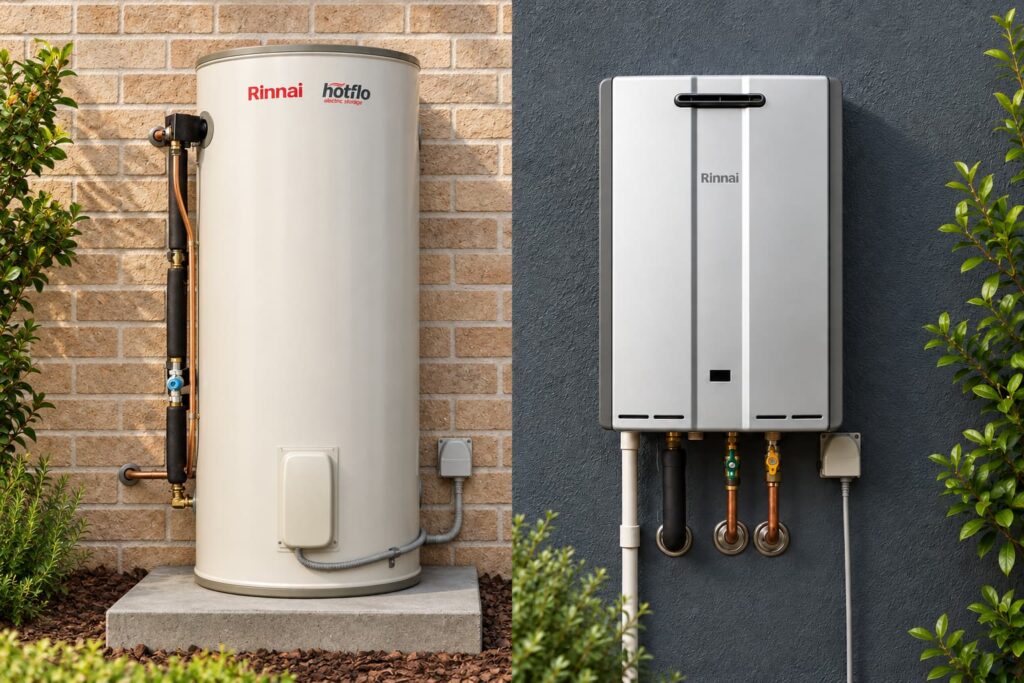
Neither system is right for every home. The better option depends on your hot water use, available space and what the existing plumbing and energy supply can support.
If you're replacing a hot water system in Southbank, we can assess your existing setup and help you choose an option that suits your home.
Yes. “Continuous flow” and “instantaneous” are commonly used to describe systems that heat water as it is needed rather than storing heated water in a tank.
In some properties, yes, but changing system type may require changes to the existing plumbing, gas or electrical supply, or installation location. The existing setup needs to be assessed before deciding whether the change is practical.
Potentially, but suitability depends on the apartment's existing hot water setup, available installation location and energy supply. In some buildings, there may also be building or owners corporation requirements that affect what can be installed.
Not necessarily. Continuous flow means the system heats water as it is needed, but the hot water still needs to travel through the pipework to the tap. How quickly it arrives can depend on the distance between the system and the tap.