ONLINE NOW - OPEN 24/7
TMV testing for aged care involves inspecting and testing thermostatic mixing valves to ensure hot water is delivered at safe temperatures.
For aged care facilities in South Melbourne, regular testing helps protect residents from scalding, supports compliance, and identifies problems before they become expensive repairs or safety risks.
Key Takeaways
Table of Contents
A thermostatic mixing valve (TMV) is a plumbing device that blends hot and cold water to maintain a safe outlet temperature. If the hot or cold water supply changes unexpectedly, the valve automatically adjusts to help keep the water temperature consistent.
TMV testing is the process of inspecting and testing TMVs to ensure they’re delivering hot water at safe temperatures.
TMVs are an important safety feature in aged care facilities. But they are also commonly installed in areas where vulnerable people may be at a greater risk of scalding, including:
TMV testing plays an important role in maintaining a safe environment for aged care residents. It helps reduce the risk of scalding, supports compliance with Australian plumbing standards, and ensures thermostatic mixing valves continue to operate as intended.
Older adults are more vulnerable to scalding injuries due to thinner skin, reduced mobility and slower reaction times. Regular TMV testing helps ensure hot water is delivered at safe temperatures, providing a safer environment for residents during everyday activities such as showering and hand washing.
A faulty or poorly maintained TMV can allow water temperatures to become unsafe, increasing the risk of serious burns. Routine testing helps identify worn or malfunctioning valves before they become a safety hazard, allowing repairs or replacements to be carried out promptly.
TMV testing and maintenance form part of broader plumbing safety and compliance practices in aged care facilities. Maintaining testing records and servicing TMVs in accordance with relevant Australian Standards helps demonstrate that your facility is taking reasonable steps to maintain safe hot water systems and protect residents.
For most aged care facilities, TMVs should be tested at least every 12 months to ensure they're continuing to deliver hot water at safe temperatures and operating as intended.
Australian Standard AS 4032.3 provides guidance on how TMVs should be tested and maintained throughout their service life.
However, annual testing should be viewed as the minimum, not your entire maintenance strategy. Depending on your facility's risk assessment, internal maintenance program or accreditation requirements, more frequent inspections may be appropriate.
Like any plumbing component, TMVs wear over time. Seals can deteriorate, thermostatic elements can become less responsive, and mineral build-up can affect performance. Regular maintenance helps identify these issues early, reducing the risk of unexpected failures and ensuring your hot water system continues to operate safely.
As part of your TMV maintenance program, you should:
| TMV Maintenance Requirement | Best Practice |
| Testing frequency | At least every 12 months (or more frequently if required) |
| Testing | Performed by a licensed plumber in accordance with AS 4032.3 |
| Record keeping | Keep records of all testing, servicing and repairs |
| Faults | Repair or replace faulty TMVs promptly |
| Maintenance | Include TMV testing in your preventative maintenance program |
A proactive approach to TMV maintenance helps reduce unexpected plumbing issues, protects residents, and assures you that your hot water system is operating safely year-round.
A TMV test involves inspecting and testing each thermostatic mixing valve to ensure it's operating correctly and delivering hot water at a safe temperature. The process is carried out by a licensed plumber and is designed to identify any issues before they become safety or compliance risks.
During a TMV test, the plumber will typically:
If a TMV doesn't meet the required performance standards, it may need to be serviced, repaired or replaced.
Common issues include worn internal components, mineral build-up, incorrect water temperatures or valves that no longer respond correctly to temperature changes.
Any faulty TMVs should be addressed promptly to help maintain resident safety and ensure the facility's hot water system continues to operate as intended.
The best time to find a plumbing problem is before it becomes one. Regular TMV testing is a simple step that helps keep your facility safe, compliant and running smoothly.
If you need TMV testing in South Melbourne or ongoing preventative plumbing maintenance, contact us to see how we can help.
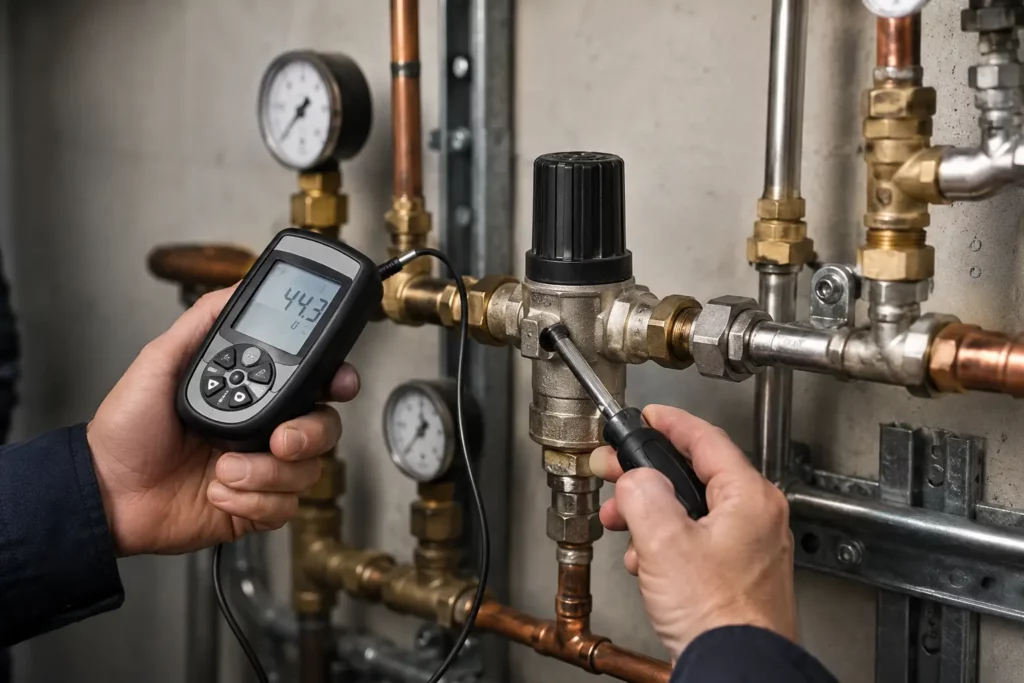
TMVs installed throughout an aged care facility should be included in your ongoing plumbing maintenance program. Regular testing helps confirm they're continuing to operate correctly and deliver water at safe temperatures, while also identifying any issues before they become a safety risk.
TMV testing should be carried out by a licensed plumber with the appropriate qualifications and equipment.
TMV testing focuses on ensuring thermostatic mixing valves are operating safely and correctly. Preventative plumbing maintenance is a broader program that includes TMV testing alongside routine inspections and servicing of other plumbing assets to help reduce unexpected breakdowns, improve reliability and keep your facility operating smoothly.
It's good practice to keep records of all TMV testing, servicing, repairs and replacements. Accurate maintenance records help track the condition of your plumbing assets, support ongoing maintenance planning, and demonstrate that your facility is maintaining its hot water system.