ONLINE NOW - OPEN 24/7
Tree roots can enter sewer pipes through cracks, damaged sections or deteriorated joints, where continued growth can restrict flow and contribute to recurring blockages.
Slow drains, gurgling and multiple affected fixtures can point to a sewer-line restriction, while a CCTV drain inspection can show whether roots are involved and assess the condition of the pipe.
Clearing the roots may restore flow, but damaged pipework may also need repair or replacement.
Key Takeaways:
Table of Contents:
Tree roots can cause ongoing problems when they find their way into sewer pipes. In South Yarra, the problem may not be obvious until a drain starts blocking or the same blockage keeps coming back.
If tree roots are suspected, it’s worth finding out what’s happening inside the pipe rather than just clearing the blockage again.
Tree roots and sewer pipes can exist near each other without causing a problem. Root intrusion becomes an issue when the condition of the pipe gives roots a way inside.
Cracked or damaged sewer pipes can leave openings for nearby roots to grow through. The damage may already be present before the roots enter, rather than the roots being the original cause of the problem.
Pipe joints can also become vulnerable as they deteriorate or separate over time. Roots that reach these openings can grow into the pipe and continue developing inside it.
Tree root intrusion doesn’t have one unmistakable symptom. The signs can look like other sewer or drainage problems, so the pattern of the problem can be more useful than any single symptom.
A sewer pipe affected by root growth may have less space for wastewater to pass through. This can cause slow drainage or contribute to blockages that return after the drain has previously been cleared.
Gurgling from toilets or drains can occur when wastewater and air are struggling to move normally through the drainage system. It can be a sign of a restriction further along the sewer line, including one caused by root growth.
When several fixtures are draining poorly at the same time, the problem may be further along the shared sewer line rather than at one individual fixture. Tree roots are one possible cause, but an inspection is needed to identify what is actually restricting the pipe.
A CCTV drain inspection lets a plumber look inside the sewer pipe instead of relying on symptoms alone. This helps establish if tree roots are involved and where the affected section of the pipe is located.
A drain camera can identify visible root growth in accessible sections of the sewer line and show where it is affecting the pipe. If roots or another obstruction block the camera’s view, they may need to be cleared before the pipe wall and full affected section can be assessed.
The inspection can also reveal visible cracks, damaged joints or other defects around the affected section. Removing the roots may clear the immediate blockage, while damage to the pipe may need separate attention.
What happens next depends on the extent of the root growth and the condition of the sewer pipe. The roots may need to be cleared, but damage that allowed them into the pipe may also need attention.
Roots obstructing the sewer line can be cut or cleared to reopen the pipe and allow wastewater to flow properly again. The method used will depend on the extent of the intrusion and the condition of the pipe.
If roots have entered through a damaged section or failed joint, clearing them does not repair that opening. Depending on the extent and location of the damage, the affected pipework may also need to be repaired or replaced.
Tree root blockages can return when the opening that allowed the roots into the sewer pipe is still there. Clearing the roots can restore flow, but it doesn’t necessarily repair a crack, damaged joint or other defect in the pipe.
If the entry point remains, roots may grow into the pipe again over time. Whether the pipe needs further repair will depend on what caused the root intrusion and how badly the pipe has been damaged.
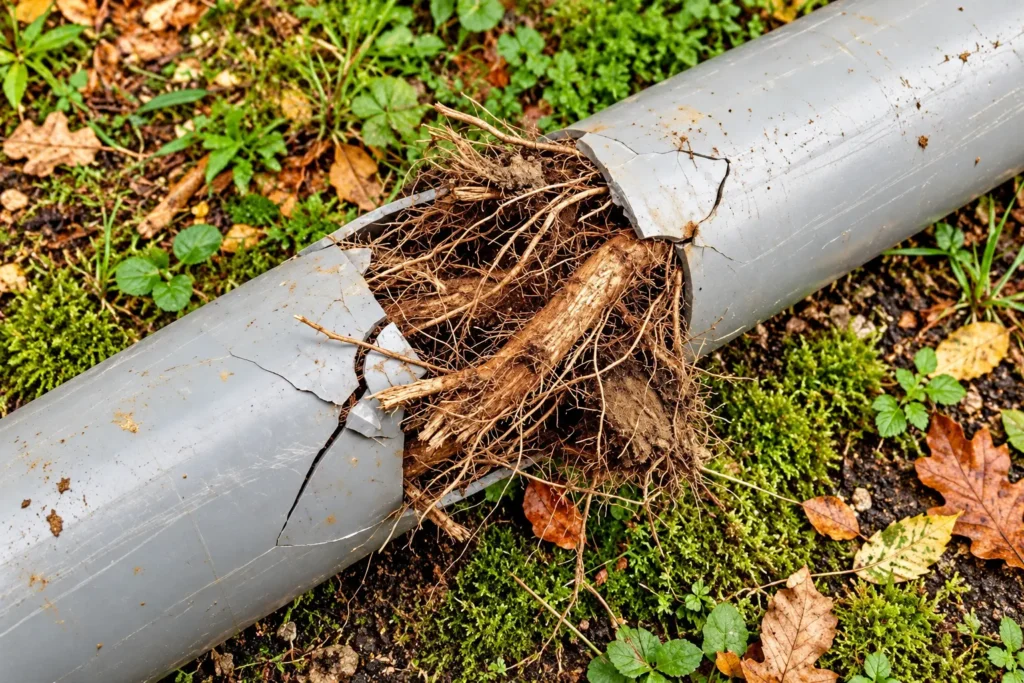
Removing tree roots from a sewer pipe can get wastewater flowing again, but the next step depends on the condition of the pipe. If there is a crack, failed joint or damaged section, that problem may still need to be dealt with.
For South Yarra homeowners dealing with recurring sewer blockages, a CCTV inspection can show what is happening inside the pipe and whether root clearing alone is likely to be enough.
If you suspect tree roots are affecting your sewer line, we can inspect the pipe, find out what’s causing the problem and explain your options.
Tree roots are more likely to enter where there is already an opening, such as a crack, failed joint or damaged section of pipe. Finding roots inside a sewer line can therefore also point to a problem with the pipe itself.
In some cases, roots can be cleared from inside the sewer line without excavating the pipe. Whether excavation is needed depends on the condition of the pipe and whether any damaged sections also require repair or replacement.
In South Yarra, responsibility depends on which side of the property connection point the affected pipe is on.
South East Water maintains the sewer up to that connection point, often near the property boundary, while pipes and fittings on the property side are generally the owner’s responsibility. If the location is unclear, a licensed plumber can determine where the blockage is.
Not necessarily. Roots inside a sewer pipe don’t automatically mean the tree needs to be removed. The first step is to establish where the roots have entered and assess the condition of the affected pipe.